
| Packing | Composition | Details |
|---|---|---|
| 10 Mini Bottles 5ml Each | Bacillus Clausi Spores Suspension(Probiotic) 2 Billion Spores | Details |
| 60 ml with Carton | Lactic Acid Bacillus 100 million spores + Nicotinamide 15mg + Pyridoxine 1.5mg + Folic Acid 100mcg + Zinc Sulpahte | Details |
| 1gm x 20 sachets | Racecadrotil 100 mg + Zinc 10 mg + FOS 100 mg | Details |
Trillions of microorganisms live in the human gut, and they’re doing more work than most people realize — digestion, metabolism, immune signaling, even mood. Modern life keeps disrupting that balance: overused antibiotics, erratic eating schedules, processed diets. That disruption is exactly why demand for a strong probiotic medicine range has taken off, and why gastrointestinal health has become one of the fastest-growing categories in Indian pharma.
For entrepreneurs, distributors, and marketing companies, this is one of the more profitable corners of the industry to build in right now. A PCD (Propaganda Cum Distribution) pharma franchise, or a third-party contract manufacturing setup, gets you into the category with low upfront risk and real room to scale — and with probiotic capsules in India seeing consistent year-over-year demand growth, the timing works in your favor.
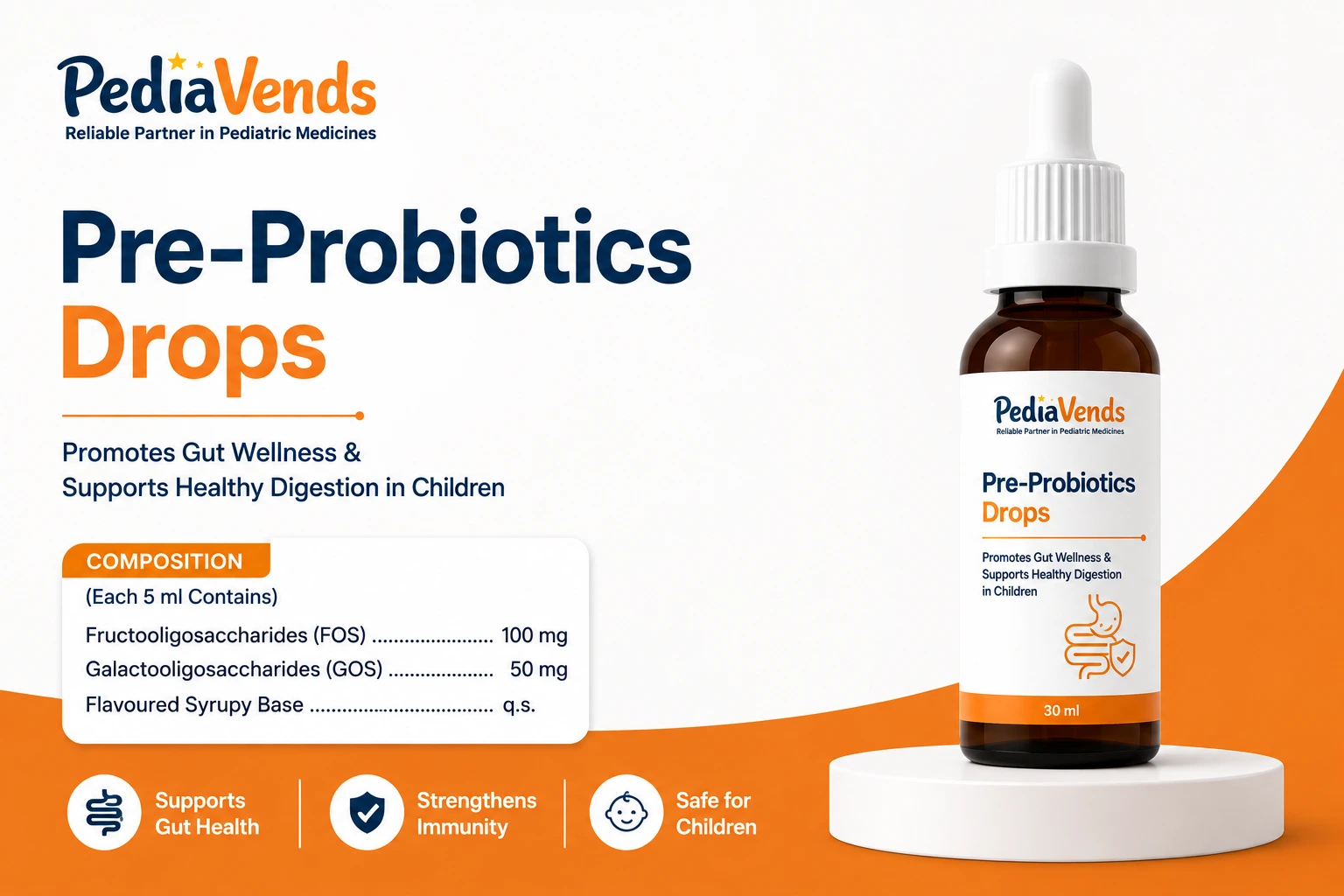
Building a competitive portfolio starts with understanding what you’re actually selling. Prebiotic meaning, in plain terms: a non-digestible fiber — think Fructooligosaccharides (FOS) or Galactooligosaccharides (GOS) — that feeds the good bacteria already living in your gut. It doesn’t add new bacteria. It feeds the ones you’ve got.
Probiotics work differently. They’re live microorganisms that, taken in sufficient quantity, directly restore and rebalance gut flora. One feeds, the other repopulates. Get that distinction into your marketing materials clearly, because customers ask about it constantly.
People search probiotic or prebiotic and prebiotic vs probiotic far more than most franchise pages account for — so here’s the direct version.
Probiotics are live bacteria. You’re adding organisms to the gut. Prebiotics are fiber. You’re feeding organisms already there.
That’s the core of the prebiotic probiotic difference, and honestly, most patients don’t need to pick one over the other — the two work better together than apart. A quick way to think about it: probiotics are the seeds, prebiotics are the soil. Plant seeds without soil and they won’t take. Is prebiotic and probiotic the same? No — but they’re designed to be paired, which is exactly why synbiotic formulations (prebiotic and probiotics combined into one capsule) have become the fastest-growing sub-segment in this category.
Standalone formulas still sell, but combination therapy is where the category’s heading. Probiotic & prebiotic capsules — also written as prebiotic probiotic capsule or capsule prebiotic formulations depending on how your target market searches — pair live bacteria with a fiber base in a single dose. The fiber does double duty: it shields the bacteria from stomach acid on the way down, then feeds them once they reach the colon, which means more live organisms actually surviving to do their job. This is the mechanism behind most prebiotic and probiotic supplement and probiotic prebiotic supplements ranges on the market today.
Modern clinical practice has adopted these capsules for a fairly specific set of problems. The core probiotic capsules uses — and by extension, probiotic & prebiotic capsules uses and prebiotic and probiotic capsule uses — break down into three main categories:
On the prebiotic side specifically, prebiotic tablet uses and prebiotic capsules uses center on three things: relieving chronic constipation by softening stool and stimulating regular bowel movement, protecting the “good” bacteria species already established in the gut without feeding pathogenic ones, and supporting metabolic health by regulating short-chain fatty acid production — which in turn helps with glycemic control and lipid profile. None of this requires live bacteria. It’s pure fiber doing the work.
A probiotic medicine range earns its shelf space across every age group, not just adults:
Beyond constipation relief, the wider list of prebiotic benefits includes better mineral absorption (particularly calcium and magnesium), reduced gut inflammation, and a more resilient microbiome that bounces back faster after antibiotic courses. That last point is why prebiotic supplements for gut health and prebiotic for gut health searches spike right after flu season, when antibiotic prescriptions climb.
Franchise partners typically stock across three formats, and each has its own search demand worth knowing:
If you’re building out a full range, don’t just stock one format. Prescribers reach for whichever format fits the patient in front of them, and a franchise that only offers capsules is leaving tablet and sachet demand on the table.
Probiotic capsules composition typically comes down to three variables: the bacterial strain mix (Lactobacillus and Bifidobacterium species show up most often), the CFU — Colony Forming Unit — count per dose, and a prebiotic fiber base like FOS or GOS that supports strain survival through gastric acid. As a franchise partner, you can specify all three at the formulation stage: strain ratio, CFU strength, delivery format. That’s the actual lever you’re pulling when you differentiate your SKU from a competitor’s.
Not every prebiotic product needs live bacteria at all. A standalone prebiotic fiber or prebiotic fiber supplement line — built purely around FOS, GOS, or inulin — serves a real, separate market: patients managing chronic constipation or metabolic concerns who don’t need or want a probiotic component. It’s a smaller SKU count to stock, and it fills a gap most PCD franchises skip because they default to combination formulas.
Here’s something worth getting right in your marketing copy: probiotics and prebiotics are generally classified as nutraceuticals or dietary/food supplements, not conventional drugs — they work by modulating gut flora rather than through pharmacological drug action. That probiotic drug class distinction isn’t just semantics. It changes what regulatory filing you need, what labeling claims you’re legally allowed to make, and what language your field reps can use at point of sale. Get this wrong and you’re looking at compliance issues down the line, not just a marketing slip-up.
Probiotic capsules dosage isn’t one number — it depends on strain and CFU count. A maintenance-level formula and a post-antibiotic recovery formula shouldn’t share a dosage line just because they’re both “probiotic capsules.” Confirm exact dosing per SKU with your manufacturer, and reflect it accurately on the pack insert. A generic dosage figure copied across your whole range is the kind of shortcut that erodes prescriber trust fast.
Most patients tolerate probiotic supplementation without issue. When something does come up, it’s usually mild and temporary — some bloating, gas, or a shift in stool pattern in the first few days as gut flora recalibrates. The one group that needs real caution: immunocompromised patients or anyone with a central line catheter, who should only use probiotics under medical supervision. Document the actual probiotic pill side effects per formulation on the insert. Don’t generalize across your entire range — that’s a corner worth not cutting.
Across the Indian PCD market, probiotic capsules names, probiotic capsules name, and probiotic tablets name conventions usually signal what’s inside — single-strain, multi-strain (SBO), synbiotic, or condition-specific formulas built for post-antibiotic recovery, IBS, or pediatric use. If you’re launching a new SKU, name it in a way that reflects the strain count or use case. A prescriber scanning a shelf full of similarly-named products will reach for the one whose name actually tells them something.
Two commercial models dominate this space, and which one fits depends on your capital, infrastructure, and how much brand control you actually want.
PCD Pharma Franchise model suits medical reps, distributors, and entrepreneurs starting with minimal capital. You sell and operate an existing brand’s product line in a defined territory. What you get in return:
Want a custom formulation under your own brand? Third-Party Manufacturing is the better route. You keep full control of brand registry, packaging, and pricing while delegating actual production to a certified facility.
Beyond standard nutritive supplements, Pediavends carries a full catalog of pediatric drops, specialty syrups, dry syrups, and individually formulated pre-probiotic packages.
Regulatory compliance built in. Every production partner holds active WHO-GMP and ISO certification — a non-negotiable for anyone selling pediatric products.
A franchise process that doesn’t waste your time. Whether you’re coming in as a pediatric PCD franchise partner or through third-party private label (PBM), onboarding is built to move fast and stay hassle-free.
With over a decade in this specific niche, Pediavends helps you cut through the usual supply chain friction and get effective, child-safe gut modulators into pediatricians’ hands and hospital formularies faster than building that network from scratch would take.
Is prebiotic and probiotic the same thing? No. Probiotics are live bacteria you’re adding to the gut. Prebiotics are fiber that feeds bacteria already there. They’re different mechanisms — which is exactly why they’re often combined into one synbiotic formula rather than sold as substitutes for each other.
When should I take prebiotic and probiotic capsules? Most formulations are best taken with food, since a meal buffers stomach acid and improves bacterial survival — but this varies by strain and product, so always check the specific pack insert rather than assuming one rule applies across every formula.
What’s the difference between a prebiotic tablet and a prebiotic sachet? Same active ingredients, different delivery. Tablets are simpler to dose and more shelf-stable; sachets dissolve into liquid and work better for patients — especially children or the elderly — who have trouble swallowing capsules.
The digestive wellness market isn’t slowing down, and a well-built probiotic and prebiotic medicine range is a genuinely sound business call — whether you’re securing local monopoly rights through a PCD franchise or building your own brand through third-party contract manufacturing. Either path gets you into one of the strongest-growing categories in Indian pharma right now.